

O que você está procurando?
Os Mistérios do Codificador do Sistema de TV
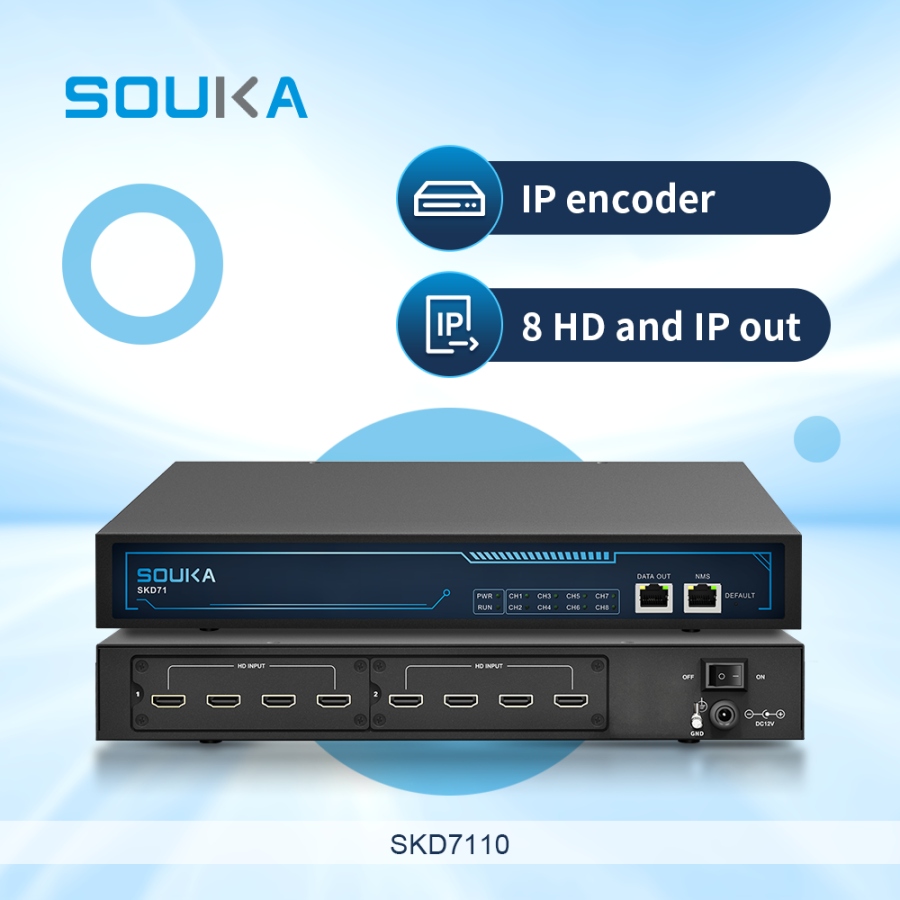
Na era digital atual, o codificador de sistemas de televisão, como uma das tecnologias-chave no campo da radiodifusão, desempenha um papel crucial. Ele não só afeta a qualidade dos programas de televisão que assistimos, como também oferece suporte robusto para diversas aplicações multimídia. Hoje, vamos explorar os princípios de funcionamento dos codificadores de sistemas de televisão, as interfaces dos dispositivos de hardware e as funções que eles podem executar.
A principal função de um codificador de sistema de televisão é converter sinais brutos de vídeo e áudio em um formato digital adequado para transmissão e armazenamento. Esse processo envolve diversas etapas e tecnologias complexas.
Primeiramente, o codificador amostra e quantiza o sinal de vídeo analógico de entrada. Ao amostrar o sinal de vídeo em uma frequência específica, ele o converte em uma série de valores discretos. Simultaneamente, o sinal de áudio passa por um processamento semelhante e é convertido em dados de áudio digital.
Em seguida, o codificador aplica algoritmos de compressão a esses dados de vídeo e áudio digitalizados. Padrões de compressão comuns, como H.264 e H.265, reduzem significativamente a quantidade de dados, removendo informações redundantes e aproveitando as correlações entre as imagens e o áudio, mantendo uma boa qualidade.
Durante o processo de compressão, o codificador realiza predições interquadro e predições intraquadro no vídeo. A predição interquadro utiliza as similaridades entre quadros adjacentes para reduzir o volume de dados, enquanto a predição intraquadro otimiza com base nas correlações de pixels dentro do mesmo quadro.
Finalmente, os dados comprimidos são encapsulados em formatos específicos, como MPEG-TS (MPEG Transport Stream), para facilitar a transmissão em redes ou o armazenamento em diversas mídias.
Para permitir a conectividade e a transmissão de dados com outros dispositivos, os codificadores de sistemas de televisão são normalmente equipados com uma variedade de interfaces.
Interface HD (Interface Multimídia de Alta Definição)
Esta é atualmente a interface multimídia de alta definição mais utilizada. Ela pode transmitir simultaneamente sinais de vídeo e áudio de alta qualidade, suportando altas resoluções e altas taxas de atualização, proporcionando aos usuários uma experiência audiovisual nítida e fluida.
Interface SDI (Interface Digital Serial)
Comumente utilizada em transmissões profissionais, essa interface oferece alta estabilidade e capacidade de transmissão a longa distância, permitindo a transmissão de sinais de vídeo digital não comprimidos.
Interface USB (Universal Serial Bus)
Essa interface pode ser usada não apenas para conectar dispositivos de armazenamento, mas também para troca de dados e controle com computadores e outros dispositivos.
Interface Ethernet
Utilizada para estabelecer conexões de rede, esta interface suporta o controle remoto do codificador, o envio e recebimento de dados e a comunicação com outros dispositivos na rede.
Interfaces de áudio
Interfaces como conectores XLR e RCA são usadas para conectar dispositivos de áudio externos para entrada ou saída de sinais de áudio.
Os codificadores de sistemas de televisão oferecem uma ampla gama de funções, trazendo grande conveniência para a indústria de radiodifusão e aplicações multimídia.
Conversão e transmissão de sinais
Eles convertem sinais de vídeo e áudio de várias fontes, como imagens de câmeras ou sinais de satélite, em um formato digital unificado e os transmitem para os receptores por meio de diferentes métodos.
Serviços de codificação e streaming em tempo real
Eles podem codificar vídeo em tempo real, permitindo a transmissão em redes para aplicações como vídeo ao vivo online e videoconferência.
Suporte a múltiplos formatos
São compatíveis com diversos formatos de codificação de vídeo e áudio para atender a diferentes cenários de aplicação e requisitos de dispositivos.
Otimização da Qualidade
Ajustando parâmetros de codificação como resolução, taxa de bits e taxa de quadros, eles otimizam a eficiência da transmissão e o espaço de armazenamento, garantindo ao mesmo tempo um certo nível de qualidade de imagem.
Em resumo, os codificadores de sistemas de televisão desempenham um papel indispensável na comunicação multimídia moderna. À medida que a tecnologia continua a avançar, seu desempenho e funcionalidade continuarão a melhorar, proporcionando-nos experiências audiovisuais ainda mais empolgantes.


